The Rainforest's Song of Many Colors
# The Rainforest's Song of Many Colors
Deep in the heart of the ancient rainforest, where sunlight filtered through emerald canopies in dancing fragments, there existed a secret known only to the oldest trees and the wisest creatures. The rainforest sang.
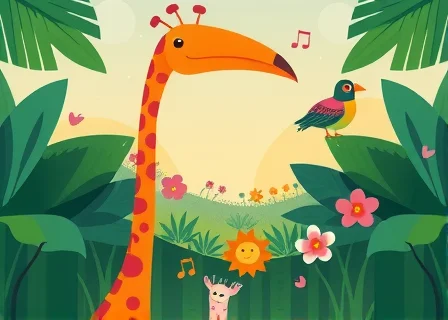
Not with voices as humans understand them, but with colors.
Each hue that shimmered across the forest floor, each iridescent gleam on a butterfly's wing, each vibrant bloom that burst forth from the rich earth carried a note in the grand symphony of life. The blues sang of rivers winding through the undergrowth, their waters cool and eternal. The greens hummed the steady song of growth and renewal, of leaves reaching toward light. The reds and oranges blazed with passion, the fire of blooming season and the warmth of sun-kissed fruits.
For millennia, the song flowed uninterrupted, weaving through the roots and branches, binding every living thing in harmony. The jaguar's spotted coat, the poison dart frog's brilliant warning, the morpho butterfly's electric wings—all were instruments in the endless melody.
Then came the silence.
It began at the edges, where human hands reached deeper into the green heart. Trees fell, and with them, their colors faded to gray. The song grew quieter, notes dropping away like falling leaves. Animals fled or fell still. The vibrant tapestry dimmed.
In a small village nestled where the forest met the cleared lands, a young girl named Amara dreamed in colors she had never seen. Her grandmother had told her stories of the rainforest's song, of how it once could be heard by those pure of heart. Amara felt the absence like an ache in her chest, a hollow space where music should live.
One morning, guided by something older than memory, Amara walked into what remained of the ancient forest. She carried nothing but a small seed pod her grandmother had given her, carved with symbols from a time when humans and forest lived as one.
Deep among the shadows, she found it—a single tree, its bark pale and sickly, its leaves few and fading. This was the Heart Tree, the conductor of the rainforest's song, and it was dying.
Amara pressed the seed pod to her ear and heard, faint as a whisper, the last note of the old song. She understood then what she must do.
With hands that did not tremble, she planted the seed pod at the Heart Tree's roots and sang. She sang of rivers and sunlight, of jaguars and butterflies, of the promise of colors yet to bloom. Her voice was human, small and imperfect, but it carried something the forest had not heard in generations: hope.
The seed pod split. A shoot emerged, green as new beginnings.
And slowly, impossibly, the colors returned. Not all at once, but like dawn chasing away night. A blue here, a red there, greens upon greens unfolding across the canopy. The song rose again, tentative at first, then stronger, weaving through every leaf and claw and scale.
The rainforest had found its voice, and this time, humans had learned to listen.