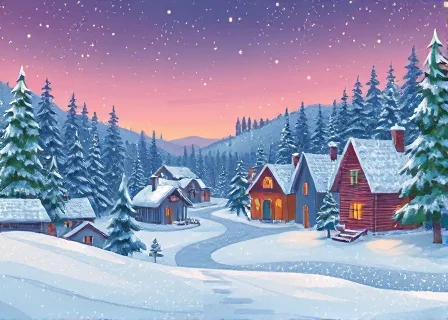
The Snow That Was the Earth's Whisper
# The Snow That Was the Earth's Whisper
Long ago, before mountains forgot their names and rivers learned to sing, the Earth grew lonely. She had created forests that stretched like green oceans, oceans that cradled islands like sleeping children, and skies that painted themselves anew each dawn. Yet something was missing. The Earth longed to speak, to whisper secrets to the creatures who walked upon her skin, but her voice was too vast, too thunderous. When she tried to speak, volcanoes erupted. When she sighed, hurricanes spun across the continents.
So the Earth asked the Moon for counsel. "How can I whisper without shaking the world?" she asked.
The Moon, who had watched over the Earth for eons, glowed softly. "You must learn to speak in silence. You must send your words when the world is sleeping, in a language so gentle that it disappears with the dawn."
And so the Earth learned to whisper snow.
Each winter, when the nights grew long and the creatures huddled close to their fires, the Earth would gather her thoughts and breathe them skyward. Her breath became clouds, and her whispers became snowflakes. Each flake carried a fragment of her memory: the first flower that ever bloomed, the laughter of the first child, the sorrow of the first goodbye, the hope of the first spring.
The snow fell silently upon the world, settling on rooftops, forests, and fields. And those who listened—truly listened—could hear the Earth's stories.
A young girl named Elara was the first to understand. She lived in a cottage at the edge of a village, where the old pine trees bowed low under winter's weight. One night, unable to sleep, she stepped outside in her bare feet. The snow was falling softly, and as the flakes landed on her outstretched palms, she heard them. Not with her ears, but with something deeper—something ancient that lived in the marrow of her bones.
She heard the Earth remembering the dinosaurs, their great footsteps shaking the continents. She heard the Earth mourning the forests that had burned. She heard the Earth dreaming of a future where children would plant more trees than they cut, where rivers would run clean, where all creatures would have a home.
Elara ran inside and told her grandmother. "The snow is talking! The snow is the Earth's whisper!"
Her grandmother smiled, her eyes knowing. "I heard it too, when I was your age. But most people forget. They see only cold, only inconvenience. They shovel and salt and curse the snow, never listening to what it says."
From that day forward, Elara became the keeper of the Earth's whispers. She taught the villagers to listen. She showed them how to catch snowflakes on their tongues and close their eyes. Some heard songs. Some heard lullabies. Some heard warnings about the springs that would come too early and the summers that would burn too hot.
Years passed, and Elara grew old. When her time came to return to the Earth, she asked to be buried in the first snow of winter. "I want to become part of the whisper," she said.
And so she did. Now, when the snow falls and you listen closely—truly closely—you might hear two voices intertwined: the Earth's ancient wisdom, and a girl who loved enough to become a whisper herself.
That is why snow is silent. That is why it disappears with the warmth. The Earth's whispers are not meant to last forever. They are meant to be heard, to be remembered, and to be passed on, like stories told beside a fire, waiting for the next winter, the next snow, the next listener.