The Wind That Was the Earth's Secret Voice
# The Wind That Was the Earth's Secret Voice
Long ago, before the mountains learned their names and the rivers knew where to flow, the Earth had no voice. She watched her children—birds, beasts, and the first people—struggle to understand her needs, her warnings, her love. But she could not speak, and so they wandered blindly, sometimes harming the very soil that nourished them.
One morning, as the sun painted the sky in shades of rose and gold, the Earth sighed. It was a sigh born of centuries of silence, heavy with all the words she had never spoken. That sigh slipped through cracks in the stones, danced between blades of grass, and rose into the sky.
But the sigh did not disappear. It became the first wind.
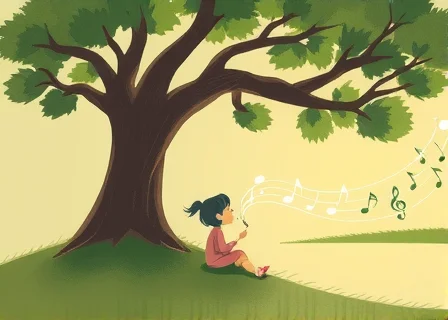
At first, the wind was shy. It whispered through hollow reeds and made them sing. The people heard the music and gathered close, tilting their heads. "What is this sound?" asked a young girl named Elara, whose hair was the color of wheat and whose heart was full of questions.
The wind curled around her fingers, warm as a mother's touch. And in that moment, Elara understood. The wind was not merely air moving through the world—it was the Earth herself, finally able to speak.
Elara became the first Listener. She taught others to close their eyes and feel what the wind carried. A gentle breeze through the orchard meant the Earth was pleased. A sharp gust warning of storms meant she was concerned. And when the wind howled through winter nights, it was the Earth singing her children to sleep, promising that spring would return.
But not everyone believed. A proud king named Theron declared that the wind was nothing but empty air. "I bow to no invisible voice," he proclaimed, and ordered great stone walls built around his city, high enough to block the wind entirely.
For a season, his people lived in silence. The walls held firm, and the wind could not enter. But slowly, the crops began to fail. The wells ran dry. The birds abandoned their nests. The Earth, unable to reach her children, wept.
Theron watched his kingdom wither and finally understood. With his own hands, he tore down the stones, brick by weary brick. When the last wall fell, the wind rushed in—not as a punishment, but as a forgiveness. It carried seeds on its breath and filled the wells with rain. The Earth had never stopped loving her children; she had only waited for them to listen.
From that day forward, every culture taught their children the same truth: when you feel the wind against your cheek, the Earth is speaking. Listen carefully. She tells you when to plant and when to rest, when to seek shelter and when to dance in the open fields.
And if you are very quiet, on nights when the moon is full, you can hear her still—whispering through the trees, singing through the canyons, breathing life into all things. The wind that touches your face is the oldest voice in the world, and it carries a simple message, repeated endlessly:
*I am here. I have always been here. I am home.*