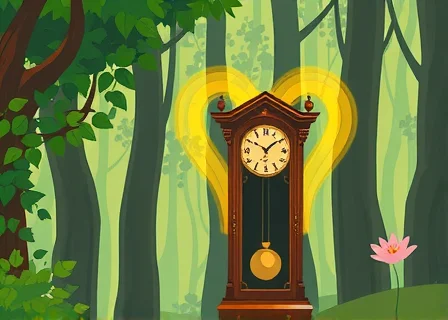
The Clock That Ran on the Pulse of the Earth
# The Clock That Ran on the Pulse of the Earth
Deep in the valley of Eldermoor, where mist clung to the hills like silver gossamer and ancient oaks whispered secrets to the wind, there stood a clocktower that had no gears, no springs, no hands of brass or steel. It was built by the first keeper of time, a woman named Elara who had learned to listen to the heartbeat of the world itself.
The villagers called it the Earth-Pulse Clock, and it had marked the passage of days for seven hundred years without winding, without faltering, without any mechanism that mortal eyes could comprehend. Its face was carved from a single piece of moonstone, glowing softly in the darkness, and its tower was woven from living willow branches that had grown together over centuries, forming spirals that seemed to shift when no one was looking.
Elara had discovered the secret in her youth, when she wandered farther into the forest than any child dared. She had pressed her ear against the moss-covered stone at the mountain's heart and heard it: a slow, steady thrumming, older than language, deeper than bone. The earth itself was alive, and it kept its own time.
She learned to synchronize her breath with that rhythm, to feel the pulse travel up through the soles of her feet and into her chest. When she understood it, she built the clock—not to measure time, but to honor it. The clocktower drew its power from ley lines that crisscrossed beneath the valley, invisible rivers of energy that connected all living things.
Generation after generation, a new keeper was chosen. Not by birth or training, but by the earth itself. The chosen one would hear the pulse in their dreams, feel it calling them to the tower at dawn. They would place their palm against the willow bark, and the clock would recognize them, its moonstone face brightening in welcome.
Young Mira became the keeper on her seventeenth birthday, though she hadn't known what was coming. She had only felt restless all spring, as if something deep inside her was trying to wake up. When she finally climbed the tower stairs and touched the ancient wood, memories that weren't hers flooded her mind—Elara's hands shaping the first branch, the laughter of children who had grown old and died beneath the clock's watch, the quiet sorrow of winters when the valley had suffered and the pulse had grown faint.
Mira understood then that the clock was more than a timepiece. It was a covenant between the people and the land, a reminder that they were part of something vast and enduring. When the harvest came, the clock's light glowed golden. When storms approached, it hummed low warnings. When someone in the village was sick, its rhythm slowed, as if sharing the burden of their pain.
Years passed, and Mira grew old, and still the clock kept time with the breathing world. She trained no apprentice, taught no successor. She simply lived, and listened, and trusted that when her time came, the earth would choose again.
Because the pulse never stopped. It waited, patient as stone, constant as the turning of seasons, faithful as love. And the clock that ran on the heartbeat of the earth would stand long after all their names were forgotten, marking not the hours of men, but the eternal rhythm of a world that remembered everything.