The Elves Who Recycled Old Dreams
# The Elves Who Recycled Old Dreams
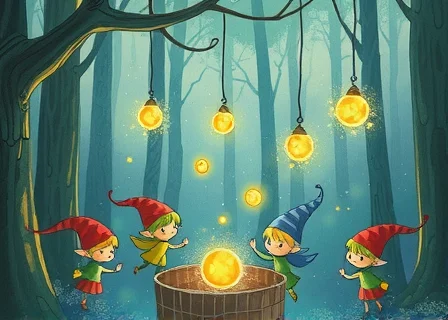
Deep in the Whispering Woods, where moonlight filtered through silver leaves like liquid starlight, there lived a colony of tiny elves known as the Dreamweavers. Unlike other elves who crafted toys or baked sweets, these peculiar beings had a far more delicate occupation: they collected and recycled old dreams that humans had forgotten.
Every morning at dawn, when the boundary between sleep and waking was thinnest, the Dreamweavers spread throughout the world on gossamer wings. They carried tiny lanterns made from dewdrop glass, which glowed softly as they hovered above sleeping children and adults alike. With needles spun from spider silk, they carefully extracted dreams that had grown stale or faded—nightmares that lingered too long, wishes that had lost their sparkle, adventures that had been dreamed one too many times.
The eldest Dreamweaver, a wise elf named Thistlewick with a beard like spun moonlight, presided over the Dream Recycling Mill. It was a magnificent structure built inside an ancient oak tree, where gears made from acorn caps and conveyor belts of ivy transformed old dreams into new wonders.
"Remember," Thistlewick would tell the younger elves, "no dream is ever truly lost. It simply needs fresh eyes to see its hidden magic."
The recycling process was delicate work. Nightmares were the most challenging—they had to be washed in rivers of laughter, hung on lines of warm sunlight, and stitched with threads of courage before they could become brave adventures instead of frightening visions. A child's forgotten wish to fly might be combined with an adult's lost dream of singing, creating a beautiful new vision of a soaring melody that inspired both to reach for the stars.
One particularly busy season, a young Dreamweaver named Pippin discovered something extraordinary: a dream so old and worn that it had almost disappeared entirely. It belonged to an elderly woman who had dreamed it as a child—a vision of a garden where flowers bloomed in colors that didn't exist anywhere on Earth.
"This dream is too faded to repair," said the other elves gently. "Let it go, Pippin."
But Pippin remembered Thistlewick's words about hidden magic. Instead of trying to restore the dream, he planted it in the soil beneath the oak tree, watering it with morning dew and singing to it in the language of wind through grass.
Weeks passed, and then something miraculous happened. A single sprout emerged, growing into a vine that produced flowers in impossible hues—colors that shimmered between blue and gold, that existed somewhere between red and sound itself. The Dream Recycling Mill had never created anything so beautiful.
Word spread throughout the Whispering Woods, and soon humans began to notice something strange. They would wake with fragments of extraordinary dreams lingering in their minds—visions of gardens with impossible flowers, of flying while singing melodies they'd never heard, of adventures that felt both new and comfortingly familiar.
The Dreamweavers watched from the shadows, their lanterns glowing with satisfaction. They understood what humans had forgotten: that dreams, like all precious things, could be renewed, reshaped, and reborn. And in the heart of the Whispering Woods, the impossible garden continued to bloom, fed by old dreams and tended by small hands that believed nothing beautiful was ever truly lost.