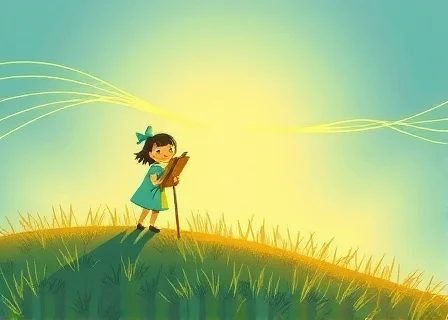
The Girl Who Could Paint the Wind
# The Girl Who Could Paint the Wind
Once upon a time, in a village nestled between whispering mountains and a sea that sang lullabies to the shore, there lived a girl named Elara who could paint the wind.
Not metaphorically, not poetically—literally. With her brush dipped in colors made from crushed berries, midnight dew, and sunlight caught in glass jars, Elara could stroke the air and leave trails of shimmering pigment that danced on the breeze.
The villagers marveled at her gift. When the harvest came late one year, Elara painted the wind gold, and the wheat ripened overnight. When children fell ill with winter coughs, she painted the wind warm and sweet with the scent of blooming cherry trees, and they breathed in health. When sorrow hung heavy over the village after old Miller passed, she painted the wind with colors of comfort—soft lavenders, gentle blues, and the warm amber of remembered laughter—and somehow, grief became bearable.
But Elara's gift came with a loneliness she could not color away. She watched other young women marry, have children, grow old with their families, while she remained different, set apart by her magic. Men courted her initially, dazzled by her ability, but none could love what they could not understand. They feared that loving her might mean loving the wind itself, and who could hold the wind in their arms?
Years passed like pages turning in an invisible book. Elara's hair gathered threads of silver, matching the streaks she often painted across stormy skies. Her hands, once smooth, became weathered like ancient tree bark. Still, she painted the wind for her village, asking nothing in return.
One autumn evening, as leaves blazed crimson and gold, a traveler arrived. He was blind, his eyes clouded like river stones, carrying only a wooden flute carved with birds in flight.
"I've heard," he said to Elara, "that you paint the wind."
The villagers expected her to demonstrate, to create her usual spectacle of swirling color. Instead, Elara simply nodded.
"Will you paint for me?" the traveler asked.
"But you cannot see," someone protested.
The traveler smiled. "I do not need eyes to see the wind. I feel it on my skin, hear it in the trees, taste it on my tongue. The wind speaks to those who listen."
That evening, Elara painted as she never had before. Not for sight, but for sensation. She painted the wind with the coolness of mountain streams, the warmth of fresh bread, the texture of beloved hands. She painted memories and dreams and the quiet joy of being truly seen.
When she finished, the traveler reached out and took her paint-stained hands in his.
"Beautiful," he whispered. "You've painted exactly what the wind feels like when it's happy."
For the first time, Elara understood: her gift was never about being seen. It was about being felt, being known, being connected to something vast and wild and free.
The traveler stayed. He played his flute, and she painted the music on the wind, creating symphonies of color that the whole village could see and feel. They married under an autumn sky that Elara painted with every color of love she'd ever known.
And when, many years later, Elara closed her eyes for the final time, the villagers say the wind carried her away—not in sorrow, but in celebration, swirling with all the colors she'd ever loved, finally free to paint the sky itself.