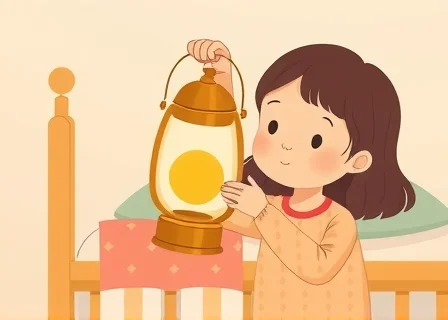
The Girl Who Kept the Sunrise in a Lantern
# The Girl Who Kept the Sunrise in a Lantern
Once upon a time, in a village nestled between the whispering mountains and the silver sea, there lived a girl named Elara who possessed the most extraordinary gift. Each evening, as the sun dipped below the horizon, Elara would climb to the highest peak with her grandmother's old brass lantern and capture the last golden rays of daylight before darkness could claim the sky.
Elara was not greedy, nor was she afraid of the night. She kept the sunrise in her lantern because the village had forgotten how to hope. Years of gray clouds and endless storms had dimmed the spirits of her neighbors. They had stopped planting gardens, stopped singing at dawn, stopped believing that tomorrow could be brighter than today.
The lantern burned with a warm, honey-colored light that never faded. Elara would walk through the village each morning, holding it high, and wherever its glow touched, flowers would bloom through cracks in the stone, children would laugh again, and the baker would remember the joy of kneading dough.
But one winter, a terrible frost descended upon the land. The cold was so fierce that even Elara's lantern began to flicker. The villagers gathered in the town square, their breath visible in the air, their eyes hollow with despair.
"The light is dying," whispered the elder. "What will we do when it's gone?"
Elara looked at her lantern, then at the faces of her people. She understood then that she had been keeping the sunrise for them, but not with them. Hope, she realized, was not meant to be carried by one pair of hands.
That night, Elara did something she had never done before. She opened the lantern's small brass door and let the captured sunlight escape. But instead of vanishing into the darkness, the light drifted like dandelion seeds toward each villager, settling gently upon their shoulders, their hearts, their outstretched palms.
One by one, they began to glow.
The blacksmith's hammer rang with music as he forged new tools. The weaver's hands flew across her loom, creating tapestries of gold and crimson. The children chased each other, leaving trails of sparkle in their wake. Even the elder, bent and weary, stood taller as warmth returned to his ancient bones.
Elara's lantern was empty now, its glass dark and cold. But as she stood among her people, she saw that she no longer needed it. The sunrise had never truly lived in the lantern at all. It had always lived in them.
When spring arrived, it came not because Elara had saved the light, but because she had learned to share it. And though she still climbed the mountain each evening, no longer to capture the sun but simply to watch it set, she knew that dawn would come whether she carried a lantern or not.
For magic, like hope, multiplies when given away. And the village that once forgot how to believe became known throughout all the lands as the place where light was never lost—it was only ever passed from hand to hand, heart to heart, like a lantern that never goes dark.