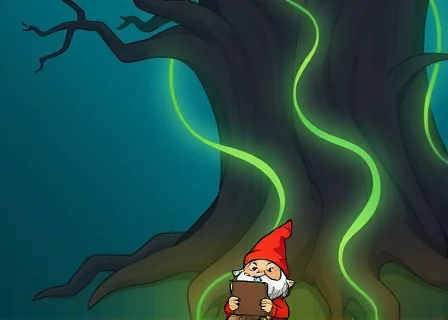
The Gnome Who Invented the Internet of Trees
Once upon a time, in the heart of the Whispering Woods, there lived a small gnome named Thistlewick Rootbottom. Thistlewick was unlike any other gnome in the village of Mossdelve. While his fellow gnomes spent their days mining for glittering gemstones or tending to underground mushroom gardens, Thistlewick could often be found sitting beneath the ancient oak trees, listening intently to their creaking branches and rustling leaves.
"You're wasting your time," the other gnomes would chuckle. "Trees don't have anything to say!"
But Thistlewick knew better. He had discovered something extraordinary: trees could communicate through their vast root systems, sending messages across the forest floor like tiny whispers traveling through an underground network. The problem was, these messages were slow and often got lost in the tangled web of roots.
One crisp autumn morning, as golden leaves danced through the air, Thistlewick had a brilliant idea. What if he could create a way for trees to share information faster and more efficiently? What if he could build an Internet of Trees?
For months, Thistlewick worked tirelessly in his workshop, surrounded by acorn caps, spider silk, and dewdrop lenses. He crafted tiny devices from polished bark and woven vines, each one capable of capturing the natural electrical signals that flowed through tree roots. He called them "Leaf Nodes."
With great care, Thistlewick attached these Leaf Nodes to the roots of the oldest trees in the forest. The mighty Oak, the wise Willow, the playful Aspen, and the mysterious Pine. As he connected each node, something magical began to happen.
The forest came alive with communication. The Oak could instantly warn the younger saplings about approaching storms. The Willow shared news of water sources from miles away. The Aspen transmitted songs and stories that had been passed down through generations of trees. Even the flowers and bushes joined the network, buzzing with excitement as they exchanged pollen reports and sunlight recommendations.
Word of Thistlewick's invention spread throughout the Whispering Woods. Animals of all kinds marveled at the interconnected forest. Birds could now find the best nesting trees with a simple chirp. Squirrels received real-time updates about nut locations. The deer could safely navigate through the woods, guided by tree signals that warned of danger.
But not everyone was pleased with Thistlewick's creation. Grumblestone, the traditionalist gnome elder, believed that technology had no place in the natural world. "The forest was perfect before your inventions," he grumbled. "You're disrupting the natural order!"
Thistlewick listened respectfully to Grumblestone's concerns. He understood that change could be frightening. So he made adjustments to his Leaf Nodes, ensuring they worked in harmony with nature rather than against it. The devices drew power from sunlight and rainwater, leaving no trace of pollution. They enhanced the trees' natural abilities rather than replacing them.
Slowly, even Grumblestone began to see the benefits. When a terrible drought threatened the forest, the Internet of Trees helped coordinate water conservation efforts across the entire woodland. When dangerous pests arrived, the trees shared defense strategies instantly. The forest became stronger and more resilient than ever before.
Thistlewick Rootbottom became known as the Gnome Who Connected the Woods. His invention spread to forests around the world, creating a global network of talking trees. And though he received many awards and honors, Thistlewick remained humble, often found sitting beneath his favorite oak, simply listening to the gentle whispers of the leaves.
For he knew that the greatest magic wasn't in the invention itself, but in the connections it fostered between all living things.