The Headphones That Heard the Trees Talk
# The Headphones That Heard the Trees Talk
Once upon a time, in a small village nestled between whispering woods and silver mountains, there lived a curious girl named Elara. She loved music more than anything in the world and spent her days collecting sounds—the laughter of children, the rustle of wind, the song of brooks.
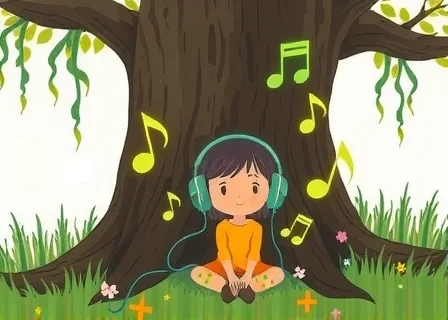
One autumn morning, while wandering through the forest's edge, Elara discovered an old wooden box half-buried beneath moss and fallen leaves. Inside lay a pair of headphones, their copper wires gleaming like captured sunlight, their ear cushions soft as dandelion fluff. A note tucked beside them read: "For those who truly listen."
Elara took the headphones home and connected them to her music player. But when she pressed play, no music came. Instead, she heard something extraordinary—voices. Not human voices, but deep, rumbling tones that seemed to rise from the earth itself.
"Ah, young one," whispered a voice so ancient it made her bones tremble. "We have been waiting."
Elara gasped and removed the headphones. Silence. She put them back on.
"Who are you?" she asked timidly.
"We are the trees," came the chorus of voices, layered like rings within a trunk. "The oaks, the birches, the pines. We have stories older than your villages, memories deeper than your roots."
Through the headphones, Elara learned that trees spoke to each other through networks of fungus and root, sharing nutrients and warnings across miles of forest. They remembered when wolves ran free, when rivers changed course, when the first humans lit fires in caves.
"The forest is dying," confessed an elderly oak, its voice cracking like weathered bark. "Your people cut without planting. They poison the soil. They do not listen."
Elara's heart ached. She had never considered that trees might feel, might remember, might suffer.
"What can I do?" she asked.
"Help them hear," the trees pleaded. "If humans could listen as you do, they would understand. They would protect what they love."
So Elara set to work. She studied the copper headphones, discovered strange runes etched into their frame, and learned to craft more pairs. She gave them to the village children first, for children listen better than adults.
One by one, the children wandered into the forest wearing the magical headphones. They returned with wonder in their eyes and sap on their sleeves, speaking of tree-grandmothers who told tales of dragons and of sapling-babies who giggled when raindrops tickled their leaves.
The adults were skeptical until little Tomas ran into the town square crying, "The elm by the mill is sick! She says her roots taste poison!"
They investigated and found the truth—the mill had been dumping chemicals into the stream. The mill closed. The elm recovered.
Word spread. Scientists came, then journalists, then politicians. Soon, forests across the land were being protected, not because of laws, but because people could finally hear the trees' voices.
Elara grew old, her hair silver like mountain peaks. The original headphones never left her ears. On the day she passed, every tree in the forest bowed, and their leaves whispered a lullaby that carried her soul to the stars.
The headphones were placed back in the wooden box, buried beneath moss and leaves, waiting for the next listener who truly cares.
And if you walk through any ancient forest today, pressing your ear to gnarled bark, you might—just might—hear a faint copper whisper: "We are still here. We are still waiting. Listen."