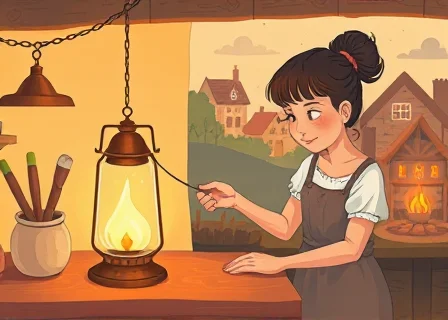
The Magic Lantern That Chased Away Sadness
In the quiet village of Lumière, nestled between whispering pines and silver streams, there lived a young lantern-maker named Elara. Her fingers were stained with soot, her apron patched a hundred times, but her heart carried a heavier mark—the shadow of grief that had settled there since her grandmother passed. The village, once bright with laughter and song, had grown dim. Children played in hushed tones, and the cobblestone streets seemed to echo with sighs.
One evening, as autumn painted the sky in bruised purples and golds, Elara wandered into the forest to gather pine resin. The trees stood like ancient sentinels, their branches clawing at the fading light. Deep in the woods, beneath a tangle of ivy and moss, she found it: a lantern unlike any she had ever seen. Its glass was carved from a single piece of crystal, its frame forged from metal that shimmered like starlight. When she touched it, warmth spread through her fingertips, and a faint hum resonated in her chest.
She carried it home, setting it upon her workbench. That night, as sorrow weighed heavy upon her, she lit the lantern. Instead of flame, a soft luminescence bloomed—golden at first, then shifting through every hue of dawn. And then, impossibly, the light took shape. Tiny figures danced upon the walls: her grandmother, smiling; children laughing in sunlit meadows; villagers gathering around a blazing bonfire, their faces alight with joy. The lantern did not merely cast light—it cast memory, hope, and wonder.
Word spread quickly through Lumière. The baker, whose hands had grown stiff with loneliness, came first. When the lantern's glow touched his face, tears welled in his eyes, but they were tears of relief, for he saw his late wife's hands kneading dough beside his own. Next came the miller's daughter, who had not sung since her brother sailed away. The lantern painted the walls with ships riding gentle waves, and her voice, long silent, rose into the air like a bird set free.
Elara carried the lantern through the village each dusk. Wherever its light fell, sadness retreated like mist before the morning sun. It did not erase pain—grief, she learned, was not meant to be erased—but it reminded people that joy still lived alongside it, waiting to be seen. The lantern taught them that darkness and light were not enemies, but companions, each giving meaning to the other.
But the lantern's magic was not without condition. Elara noticed that its glow dimmed when she kept it to herself, when her own heart grew too heavy to share it. Only when she stepped into the cold streets, only when she knocked on doors and offered its light to others, did it burn brightest. The lantern, she realized, was not a vessel of magic—it was a mirror. It reflected what she gave it. If she gave isolation, it flickered. If she gave connection, it blazed.
Years passed, and the village of Lumière transformed. Windows glowed again. Music drifted through open doors. The cobblestone streets, once heavy with silence, now rang with footsteps and song. Elara grew older, her hair turning the color of winter frost, but her eyes remained bright. She never married, never traveled far, but she never lacked for company, for the entire village had become her family.
On her final evening, as the sun dipped below the pines, Elara placed the lantern in the village square. She lit it one last time, and its light rose higher than ever before, painting the sky itself with laughter, love, and every beautiful moment the village had shared. When dawn arrived, the lantern was gone—but its glow remained, etched into the hearts of those who had learned to chase away sadness not by hiding from it, but by lighting a flame and sharing it with others.