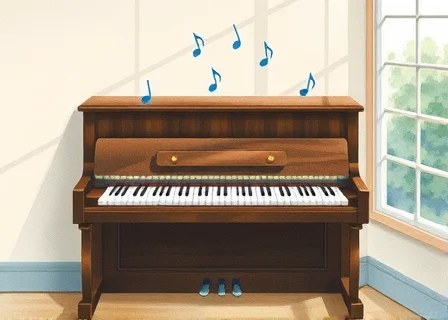
The Piano That Played the Sound of Rain
Once upon a time, in a village nestled between whispering mountains and silver lakes, there lived a young girl named Elara who had never heard rain dance upon the rooftops. For seven years, the sky above her homeland had forgotten how to cry, and the earth grew thirsty and cracked like old pottery.
Elara spent her days wandering through the dried riverbeds, collecting smooth stones and dreaming of water songs. One evening, while exploring the attic of her grandmother's cottage, she discovered an ancient piano draped in velvet sheets that shimmered like spider silk. Its keys were carved from moonstone and obsidian, and when she brushed her fingers across them, they hummed with a warmth that reminded her of tears.
That night, as the village slept beneath a sky of indifferent stars, Elara returned to the piano. She pressed a single key, and instead of a note, something extraordinary happened. The sound that filled the room was not music as she knew it, but the gentle patter of raindrops on leaves, the soft drumming on windowpanes, the rhythmic tapping that mothers hum to restless children.
Word spread through the village like wildfire through dry grass. People came from neighboring towns, walking miles with cracked lips and hollow eyes, all drawn by the miraculous instrument. When Elara played the low keys, thunder rumbled in the distance, deep and comforting. The middle keys sang of streams babbling over mossy stones. The high keys chimed like hail on tin roofs, playful and bright.
But the piano demanded something in return. Each song of rain required a memory of water from the player. Elara gave her first tear shed over a lost butterfly. She offered the splash from her childhood bath. She surrendered the taste of morning dew on her tongue. With each sacrifice, the music grew more powerful, and small clouds began gathering above the village.
A traveling merchant heard tales of the magical piano and arrived with promises of gold that could buy oceans. "Sell it to me," he begged, "and I'll bring water to every corner of the world." But Elara understood something the merchant did not. The piano was not meant to be owned or sold. It was meant to be felt, to be loved, to be played with a heart that remembered why water mattered.
On the night of the autumn equinox, Elara sat before the piano one final time. She played with every memory she possessed—the laughter of her sister splashing in puddles, the weight of wet wool after washing, the sound of her grandmother's voice telling stories of storms long past. She played until she had nothing left to give.
The sky answered.
Rain fell in sheets so thick they looked like curtains of pearls. The village danced in the downpour, children catching drops on their tongues, farmers weeping as their fields drank deeply. The piano, its purpose fulfilled, fell silent forever, its moonstone keys turning to ordinary wood.
Elara never played again, but she no longer needed to. She had learned that magic was not in the instrument, but in the willingness to give everything for something greater than oneself. And whenever rain touched her face, she smiled, knowing that some songs never truly end—they simply become part of the world they saved.