The Pinocchio Who Wanted to Be a Pilot
# The Pinocchio Who Wanted to Be a Pilot
Once upon a time, in a small village nestled between rolling hills and whispering forests, there lived a wooden puppet named Pinocchio. But this was not the Pinocchio you may have heard about before. This Pinocchio had a dream that stretched far beyond the strings that held him to the world of men.
While other puppets danced and sang for coins in the town square, Pinocchio spent his evenings perched on the highest hill, watching the clouds drift across the amber sky. He dreamed of flying—not with the help of strings or magic, but with his own wooden hands on the controls of an airplane.
"You're made of wood," the other puppets would laugh. "Wood sinks in water and burns in fire. How can it fly?"
But Pinocchio's heart, though carved from oak, beat with determination.
Every morning, he collected scraps of paper from the village market, studying drawings of birds and their wings. He sketched designs in charcoal on the walls of the abandoned barn, crafting wings from canvas and bamboo. The village children called him "The Flying Fool," but an old woman named Signora Rosa saw something different in his polished wooden eyes.
"Dreams have weight too, little puppet," she told him, handing him a small compass that had belonged to her late husband, who had been a pilot in the great war. "This will point you true when the clouds confuse your heart."
Months turned to years, and Pinocchio's workshop grew filled with failed machines. Some tumbled before they left the ground. Others soared briefly before crashing into haystacks. Each failure carved new lines into his wooden face, but also new wisdom into his spirit.
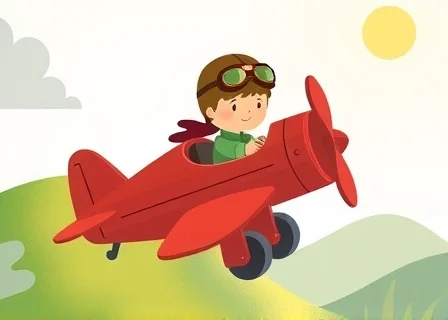
Then came the day of the Village Festival, when the Duke himself would pass through to witness the wonders of the countryside. Pinocchio unveiled his greatest creation: a small aircraft with wings like a dragonfly, powered by a propeller turned by clockwork springs he had collected from a hundred broken towers.
The crowd gathered, skeptical and snickering. The Duke's carriage slowed as Pinocchio climbed into the cockpit, his wooden fingers gripping the controls.
"Ready to fly, puppet?" the Duke called down, amused.
Pinocchio nodded, wound the final spring, and pushed forward.
The machine lurched, then rolled across the grass. The crowd gasped as it lifted—first inches, then feet, then soaring above the church steeple. Pinocchio's laughter echoed across the valley as he banked over the hills he had watched for so many years.
For three glorious minutes, he flew. The compass around his neck pointed not north, but toward his dream, fulfilled.
When he landed gently in the meadow, the crowd was silent. Then Signora Rosa began to clap, and soon the whole village cheered.
That day, Pinocchio learned that it matters not what you are made of, but what you are made for. And high above the clouds, somewhere in the golden light, the real Pinocchio smiled down upon the puppet who had earned his wings not through magic, but through courage.
From that day forward, children in the village never looked at the sky the same way again.