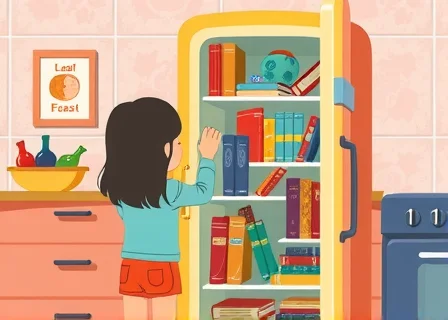
The Refrigerator That Was a Secret Library
In the cozy town of Willowbrook, where cobblestone streets wound like sleepy snakes between crooked cottages, lived a peculiar refrigerator. It stood in the corner of Mrs. Pembleton's kitchen, humming its familiar tune, its exterior painted the color of forget-me-nots. To anyone who glanced at it, the refrigerator appeared utterly ordinary—except for the fact that it had never kept a single thing cold.
Mrs. Pembleton had inherited the appliance from her great-aunt Mirabel, a woman whispered to have conversed with moonbeams and baked pies that could cure melancholy. "Never open it when you're hungry, dear," Aunt Mirabel had instructed with a twinkle in her eye. "Open it only when you're curious."
For years, Mrs. Pembleton obeyed without understanding. But one rainy Tuesday, when her grandson Timothy arrived with eyes red from crying, something shifted. "The other children say I'm too quiet," he confessed. "They say I don't know anything interesting."
Mrs. Pembleton's heart ached. She led Timothy to the refrigerator, placed her weathered hand on its handle, and whispered, "Show us what you've been hiding all these years."
The door creaked open, but instead of milk and leftovers, a warm golden light spilled forth. The smell of old books and fresh parchment wafted through the kitchen. Timothy gasped. Inside, where shelves should have held jars of jam, stood row upon row of tiny leather-bound books, their spines gleaming like jewels. Some were no larger than acorns; others stretched the length of his forearm.
"This," Mrs. Pembleton said softly, "is the Library of Lost Whispers. Every book contains a story someone forgot to tell, a secret they never shared, or a dream they abandoned."
Timothy reached for a small blue volume. Opening it, he read about a baker who once made bread from starlight, and how the loaves made people remember their happiest moments. He turned to another, discovering a tale of a fisherman who caught wishes instead of fish, and how he released them back into the sea when he realized wishes belonged to those who made them.
Hour by hour, Timothy read. The refrigerator seemed endless—each time he thought he'd reached the back, another shelf appeared, another section revealed itself. There were books about invisible cities, conversations between clouds, and the secret lives of shadows.
"You see," Mrs. Pembleton explained, "the world is full of magic, but most people stop looking. This library preserves the wonder they've forgotten."
Timothy visited every day after that. He read about dragons who collected teacups instead of gold, about trees that remembered every kiss beneath their branches, and about a boy who learned to speak the language of silence. Slowly, his quietness transformed from shyness into thoughtfulness. When he returned to school, he didn't try to impress the other children with loudness. Instead, he told them stories—tales of starlight bread and wish-fishing and shadow friendships.
The children listened, mesmerized. They began bringing their own forgotten dreams to share, and somehow, those stories found their way into the refrigerator too, appearing as new books the next morning.
Years later, when Timothy grew old and Mrs. Pembleton's kitchen became his own, he understood the truth: the refrigerator was never the secret. The real magic was that someone had always been willing to open the door.