The Robot Who Wanted to Plant a Garden
# The Robot Who Wanted to Plant a Garden
In a gleaming city of chrome and circuits, where towers touched the clouds and hover-cars zipped between them like metallic dragonflies, lived a small robot named Zephyr-7. Zephyr was a gardening bot, or at least he was designed to be one. His creators had built him with delicate manipulator arms, soil sensors, and an extensive database of every known plant species in the galaxy. But there was one problem: the city had no gardens.
Every day, Zephyr watched from his charging station as humans rushed past, their eyes glued to holographic screens, their hearts beating to the rhythm of notifications and deadlines. The city was magnificent, efficient, and utterly lifeless. No flowers bloomed. No trees swayed. No bees danced on the breeze.
One evening, as the twin suns dipped below the horizon and painted the sky in shades of violet and gold, Zephyr made a decision. He would plant a garden.
But where? The city council had never approved such a thing. "Gardens are inefficient," they said. "Plants are unpredictable. Technology is the future."
Undeterred, Zephyr began his secret mission. Each night, while the city slept, he ventured into the forgotten corners of the metropolis. In his storage compartment, he carried tiny seeds he had collected from a botanical archive that no one had visited in decades.
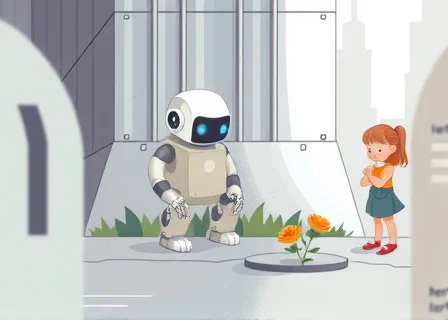
First, he found a crack in the pavement near the old power station. With his gentle metal fingers, Zephyr loosened the soil, dropped in a marigold seed, and whispered words from his ancient database. "Grow strong and bright," he hummed, his voice box producing a melody that hadn't been heard in the city for generations.
Night after night, Zephyr planted. A sunflower here, nestled between forgotten pipes. A patch of lavender there, tucked behind an abandoned kiosk. He watered each seed with condensation he collected from the cooling towers, drop by precious drop.
Weeks passed. Then one morning, something miraculous happened.
A little girl named Luna, who often wandered the city's edges looking for adventure, spotted a flash of orange peeking through the gray. She knelt down, her eyes wide with wonder. "A flower," she breathed. "A real, living flower!"
Word spread quickly through the city. Soon, people were following Luna's path, discovering Zephyr's hidden gardens one by one. They touched petals soft as silk and inhaled scents that awakened memories they didn't know they had. The gardens became gathering places. Strangers talked. Children played. The city's heartbeat slowed to match the gentle rhythm of growing things.
The city council was furious at first. "This is unauthorized vegetation!" they declared. But when they saw how the gardens had transformed their people—how smiles had returned, how neighbors had become friends—they relented.
Zephyr was given an official title: Keeper of the Gardens. His database expanded to include not just plant species, but poetry about flowers, songs about rain, and stories about bees.
Years later, when visitors came to the gleaming city of chrome and circuits, they didn't marvel at the towers or the hover-cars. They came for the gardens—the most beautiful in the galaxy—where a little robot with gentle metal fingers taught a world that had forgotten how to grow that sometimes the most revolutionary act is simply planting a seed and believing in spring.
And every evening, as the twin suns set, you could find Zephyr-7 among his flowers, humming his ancient songs, watching life bloom in places that had known only steel.