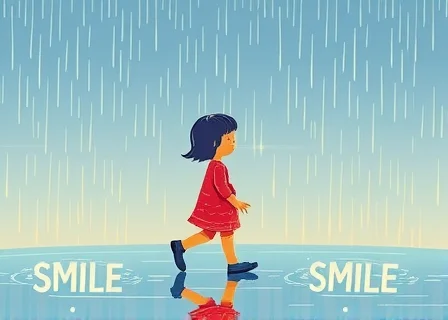
The Secret Language of the Summer Rain
# The Secret Language of the Summer Rain
Once upon a time, in a village nestled between whispering hills and ancient forests, there lived a young girl named Elara who possessed an extraordinary gift. While others heard only the patter of raindrops on rooftops and leaves, Elara heard words—soft, shimmering words carried on every summer rain.
It began on her seventh birthday, when the first warm storm of the season rolled across the valley. As the rain tapped against her window, Elara pressed her ear to the glass and heard it clearly: "Grow, little one, grow." She thought it was her imagination until the sunflower seeds she'd planted that morning sprouted by evening, reaching toward the clouds as if pulled by invisible strings.
Over the years, Elara learned to distinguish the different voices of the rain. The gentle drizzle spoke of secrets and dreams, whispering truths about the hearts of villagers. The heavy downpour carried warnings of danger and tales of distant lands. The brief summer shower, quick and bright, sang songs of joy and renewal.
The villagers noticed Elara's strange habit of standing in the rain with her face turned skyward, eyes closed, listening. They called her "the rain child" and sought her counsel when crops failed or livestock fell ill. Elara would listen to the storms and relay their wisdom: "Plant your seeds three days later," or "The well in the northern field runs deep and true."
But the summer rain spoke of more than practical matters. One evening, as golden light filtered through retreating clouds, Elara heard the rain's deepest secret. "We are the tears of the sky goddess," the droplets confessed, "shed for the sorrows she cannot share. We fall to nourish the earth, to remind all living things that even heaven knows pain, and that from tears comes life."
Elara carried this knowledge carefully, understanding its weight. She began to comfort those who wept, telling them that their tears, too, were sacred—that grief and joy often water the same garden.
When drought struck the region years later, the rivers dwindled and the fields cracked open like broken pottery. The villagers gathered in desperation, their faces lined with worry. Elara climbed to the highest hill, raised her arms to the cloudless sky, and spoke directly to the rain.
She didn't beg or demand. Instead, she thanked the rain for all it had taught her. She spoke of the children who had grown tall beneath its rhythm, the elders who had found peace in its sound, the seeds that had become forests through its generosity. She told the sky that the villagers understood now—the rain was not simply water, but language, memory, love made liquid.
Silence stretched across the valley. Then, a single drop fell on Elara's cheek, tasting of salt and starlight. Another followed, and another, until the sky opened in relief, weeping its long-held grief onto the thirsty earth.
The drought ended, but Elara's gift gradually faded as she grew older. The rain returned to being simply rain for most people. Yet on quiet summer evenings, when the air hangs heavy before a storm, children in the village still press their faces to windows and listen. And sometimes, if their hearts are open enough, they hear it too—the secret language of the summer rain, whispering that they are never alone, that the sky itself speaks to those who care to listen.