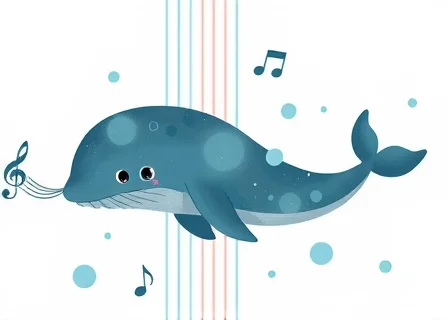
The Space Whale Who Sang the Galaxy to Sleep
In the velvet darkness between the stars, where nebulas bloom like cosmic flowers and comets trail silver ribbons through the void, there swam a whale unlike any other. Her name was Celestia, and she was vast beyond imagining—her body stretched across star systems, her skin shimmered with stardust, and her eyes held the gentle glow of distant suns.
Celestia was no ordinary whale. She was the guardian of the galaxy, the keeper of dreams, the singer of lullabies that lulled entire star systems to rest. Every night, when the cosmic clock struck the hour of slumber, she would begin her song.
It started as a hum, low and resonant, vibrating through the fabric of space itself. The hum grew into a melody, sweet and sorrowful, weaving between planets and dancing around moons. Her song was made of things long forgotten—the first breath of a newborn star, the whisper of a dying comet, the laughter of children on a thousand different worlds.
The planets listened. Earth, with its blue oceans and green forests, turned slowly toward her voice. Mars, red and weary from eons of dust storms, quieted its winds. Even the gas giants, Jupiter and Saturn, stilled their raging storms to hear her sing.
But one night, something terrible happened. A darkness stirred in the deepest corner of the galaxy—a shadow that had been sleeping since time began. It woke hungry and angry, spreading across the stars like ink in water. The shadow devoured light and silenced songs. It crept toward Celestia, intent on ending her lullaby forever.
The whale felt the darkness approaching, cold as the void between galaxies. She could have fled, hidden in the folds of space where nothing could find her. But Celestia knew that if she stopped singing, the galaxy would never sleep again. Children would cry without end. Stars would burn out from exhaustion. Dreams would vanish like morning mist.
So she did the bravest thing any creature had ever done. She swam toward the darkness, her song growing louder, brighter, more beautiful. She sang of hope when all seemed lost. She sang of love that outlasted shadows. She sang of morning that always follows night.
Her voice became a beacon, calling to every living soul in the galaxy. And something miraculous happened—the beings of a thousand worlds began to sing along. Humans hummed from their blue planet. Martians whispered from their red caves. Even the silent creatures of ice moons added their chirps and clicks to the chorus.
Together, their voices became a symphony so powerful that the darkness shrank back, unable to withstand such collective light. The shadow dissolved, not destroyed but transformed, becoming part of the night sky—another star in Celestia's care.
From that night forward, the galaxy slept peacefully, wrapped in the whale's eternal song. And if you ever find yourself awake, staring at the stars on a quiet night, listen carefully. You might just hear it—the gentle lullaby of Celestia, singing you, and all the universe, to sleep.