The Spring Flower That Bloomed in the Heart of a City
# The Spring Flower That Bloomed in the Heart of a City
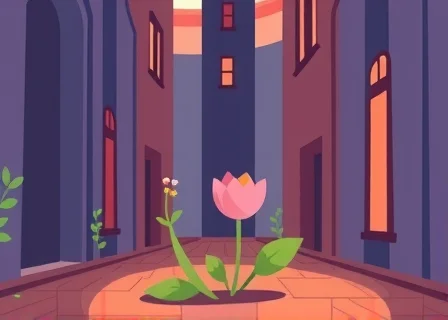
In the center of a bustling metropolis, where skyscrapers kissed the clouds and cars rushed like rivers of steel, there existed a small forgotten patch of earth no larger than a dinner plate. It sat between two grand buildings, hidden from most eyes, covered in gray dust and cigarette butts. The city had forgotten that soil could be soft, that earth could breathe.
One March morning, when the winter still clung stubbornly to the window sills, an old woman named Elara noticed this small square of dirt. She had walked past it every day for thirty years, ever since she moved to the city from her countryside village. At seventy-two, Elara carried wrinkles like maps of journeys taken, and her hands, though gnarled, remembered the touch of growing things.
"Poor little thing," she whispered to the barren patch, as if it could hear her.
That night, Elara dreamed of green shoots pushing through concrete, of petals unfurling toward a sun that actually warmed instead of merely illuminated. When she woke, she felt a stirring in her chest she hadn't felt in decades—the urge to create something beautiful.
The next day, Elara returned with a small trowel from her apartment, hidden among her few remaining treasures from the country. She knelt, her old bones protesting, and began to clear away the debris. A young businessman in a sharp suit paused, watching her with puzzled eyes.
"Why bother?" he asked. "It's just dirt."
"It's not just dirt," Elara replied without looking up. "It's possibility."
Something in her voice made him linger. Then, unexpectedly, he knelt beside her. "I used to garden with my grandmother," he admitted, his voice barely above the city's hum. "I forgot how it feels."
Word spread among the morning commuters. A woman carrying a briefcase stopped to offer water from her bottle. A child pressed a seed into Elara's palm—"For luck," he said seriously. A barista from the corner café brought coffee and stayed to help turn the soil.
They planted a single seed that nobody could identify, wrapped in a napkin from decades past, found at the bottom of a forgotten purse. It was dark and hard, like a tiny stone holding its breath.
Days passed. Then weeks. The city continued its relentless pace, but now a small group gathered each morning around the patch of earth, waiting, hoping.
And then, on the first day of spring, it happened.
A green shoot, impossibly tender, pushed through the soil. It grew before their eyes, unfurling leaves that shimmered with dew no city had produced in generations. By noon, a bud formed. By evening, it opened.
The flower was unlike any they had seen—petals the color of dawn, shifting from pink to gold to purple as the light changed. It smelled of rain on hot pavement, of fresh bread, of childhood laughter, of everything the city had forgotten it loved.
People came from all over to see it. They stood in silence, strangers shoulder to shoulder, remembering that they were human. Some cried. Some smiled. All felt something crack open inside their chests, like frozen ground welcoming spring.
The flower never wilted. It bloomed eternally, a reminder that even in the hardest places, beauty finds a way. And in its presence, the city slowly transformed—not the buildings or the streets, but the hearts of those who lived there.
Elara sat on a bench nearby, watching children play in soil that was no longer forgotten. She smiled, knowing the truth: the flower hadn't bloomed in the earth.
It had bloomed in them.