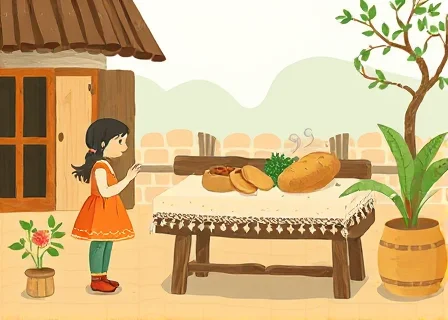
The Magic Tablecloth and the Nutritious Feast
In a quiet village nestled between emerald hills and whispering pine forests, there lived a young girl named Elara. She was known not for wealth or beauty, but for her generous heart. Though her pantry was often bare and her meals were thin broth, she never complained. Instead, she shared what little she had with anyone who came knocking at her wooden door.
One evening, as golden twilight painted the sky in hues of amber and rose, an old woman appeared at the edge of the village. Her back was bent, her hair silver as moonlight, and her cloak patched with a hundred different fabrics. The villagers turned her away, too busy with their own affairs to spare a moment for a wandering stranger. But Elara saw the woman trembling in the cold and invited her inside.
Elara had barely enough flour for one small loaf of bread, yet she baked it without hesitation and offered it with a warm smile. The old woman ate slowly, her wrinkled hands trembling as she held the crust. When she finished, she reached into her cloak and pulled out a small cloth no larger than a handkerchief. It was woven with threads of gold and silver, shimmering faintly like starlight caught in dew.
"This is a magic tablecloth," the woman said, her voice as soft as wind through reeds. "Spread it upon any surface, speak the names of three dishes you wish to share, and it shall provide. But remember this: it feeds only those who give before they take, and its power fades if used for greed."
With that, the old woman vanished into the night, leaving Elara alone with the wondrous cloth resting in her palms.
The next morning, Elara placed the cloth upon her wooden table and whispered, "Warm barley stew, fresh garden salad, and honeyed oat bread." In an instant, the cloth shimmered and swelled, and there appeared three steaming bowls, a crisp platter of greens, and a loaf of bread so fragrant it made her dizzy with joy. She ran to the village square, spread the cloth on an old bench, and called the children first, then the elders, then the weary travelers passing through. Everyone ate until their bellies were full, and for the first time in years, the village echoed with laughter instead of sighs.
Word of the magic tablecloth traveled fast. Soon, a wealthy merchant from the city heard of it and sought to claim it for himself. He arrived at Elara's door with a bag of gold coins clinking heavily in his hands. "Sell it to me," he demanded. "I will pay ten times its worth."
Elara shook her head. "It cannot be bought. It only serves those who share freely."
Enraged, the merchant snatched the cloth while Elara was tending her garden. He fled to his grand estate, locked his doors, and spread the cloth across his marble dining table. He grinned and called out, "Roasted pheasant, buttered potatoes, and spiced apple cake!"
But nothing appeared. He tried again, louder this time. Still nothing. Frustrated, he screamed every dish he could imagine, yet the cloth remained lifeless and dull. The magic had recognized his selfish heart and refused to obey.
Meanwhile, back in the village, Elara prayed the cloth would return to her. The next morning, she found it resting on her doorstep, folded neatly, its golden threads glowing softly. From that day forward, she continued to feed the hungry, heal the weary, and teach others to give without expecting anything in return.
And so, the magic tablecloth remained with Elara for the rest of her days, a symbol of abundance born not from wealth, but from kindness. Even after she grew old and passed into the stars, the cloth stayed in the village square, still shimmering, still feeding, waiting for the next generous soul to speak its spell.